Sunday, April 30, 2017

Turing-machine-like structures in a V Neumann architecture


Who invented the ‘computer’?
Everybody wondered one time who actually invented the computer ?Alan Turing. Alan Turing was born 1912 in London .He was a computer scientist.He weighs as one of the influential theorists of the computer development.But in March 1952 Turing was convicted because of his homosexuality to a chemistry castration. After this torture he became depression and killed himself.
He invented a machine that was build with a tape of zeros and ones. The moving CPU (like a little box) is running over the numbers and saves information.When the moving CPU is finished ,the tape who cames out is named the output.  

How a CPU Works (V. Neumann architecture)
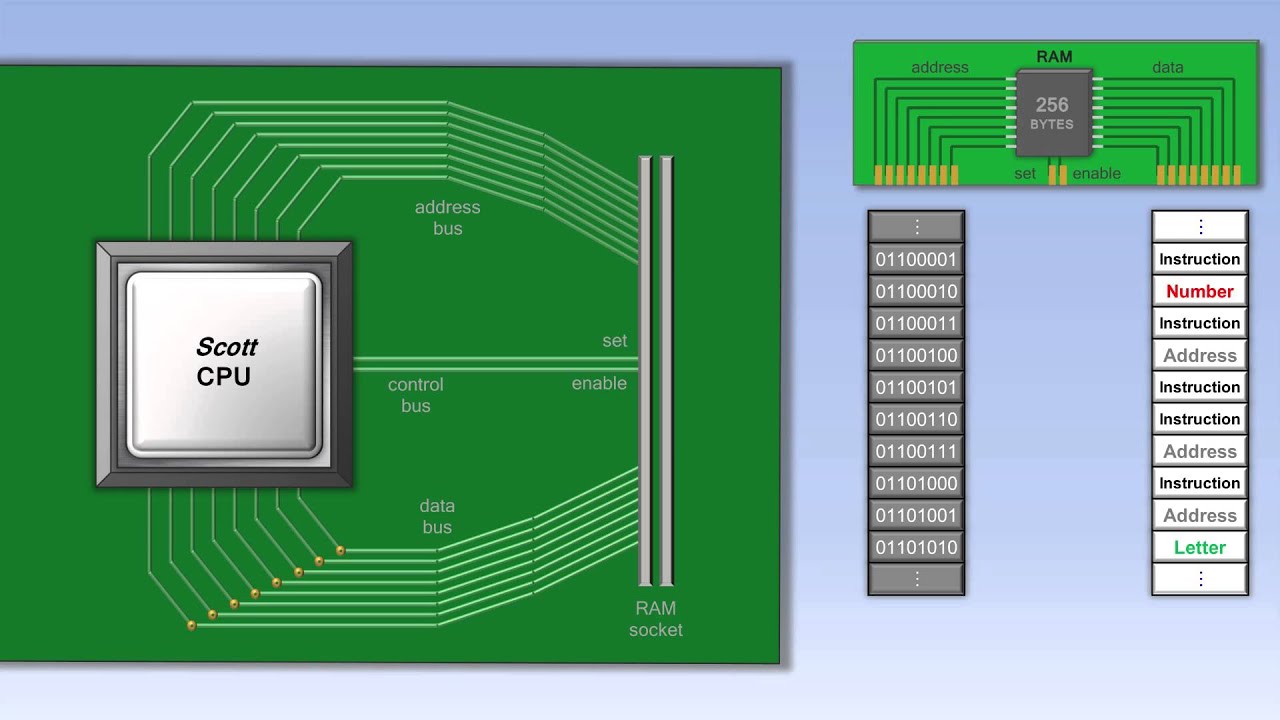
The CPU is like the brain of the computer.The most calculations take place in the CPU.The CPU is the most important element of a computer system. There are two components of a progressor.The arithmetic logic unit (ALU), which performs logical operations and the control unit (CU), which has instructions from memory.


Mind-map
Turning Machines.png

When you want to know more about this topic you can click on these videos and get more precise of information about these topics :


Turing-machine-like structures in a V Neumann architecture?

HI GUYS!!!!

In the last classes, we were talking a lot about Turning machines, How CPU works, and the V Neumann architecture.
For that, we had to find out what they are and what differences they have. So we saw some videos that recommend our teacher, and from them, we had to draw the conclusion that means everything. First, do you know what are  Turning machine and the V Neumann architecture or have an idea of what they are? If you not, now in a mindmap I will explane you.
To have an idea, the Turning machines was created by Alan Turning.
And here we can see the basic ideas, how is it, and what Alan turning  wanted to prove

Make your own mind maps with Mindomo.

But... how does it work?


And now:
How does CPU works? 
First,  The CPU is the Brain of the computer and does not exist as a design. Behind this, it has a lot of pins out that allow the CPU to take in information and send it back out the CPU. So How does it works? Firstly, the input is a strip of tape that is called memory, there you can see the numbers 0 and 1. This machine read this numbers, changing at the same time, different numbers.
Here we can see an example:
And finally...
What does the v Neumann architecture means?

To have some ideas, I made a smaller a Mindmap:


Make your own mind maps with Mindomo.

Friday, April 28, 2017

The Similarities between Turing machine and CPU-computer !

Hey,Guys !
In this post Im going to talk about (as you can see in the title ) "The similarities between Turing machine and CPU-computers ''. This is indeed a very interesting topic to talk about , because the Turing machine is the antecedent of all modern computers . This simple and abstract math concept was the basis to build modern CPU !
This concept is based in the "decision problem "the Turing machine is able to decide if a mathematical problem right or wrong is (in other words , true or false ). Deciding so what computable is . So theoretically this Turing machine is able to describe any possible problem , computing everything.
So what  is like the structure of a Turing machine :
          
In this image you can see the basis structure of the Turing machine . First of all the Input , it is a strip of tape that  we call memory . Written in this tape you can see a code of 0 and 1 .This input is processed by the CPU (the machine that you can see there ) .This machine reads the numbers 0 and 1 , one by one and then ( following certain rules )changing them to different numbers. And thats the output . The output is what you see then as an anwser to the Input .

If you want to find out more about how CPU-computers work , look at the video below .
It is a bit hard to understand but if you take your time you will learn a lot of interesting things !

Here an video to understand CPU-computers:

Here two videos to understand better Turing machines :


Here you can see a mind map that I created using Mindomo ( CLICK  here to access MINDOMO) 😄


Make your own mind maps with Mindomo.


So thats all for today ! If you like it  coment below!!!!👍


Tuesday, April 18, 2017

Michio Kaku- Quantum Computers

Michio Kaku "Moore´s Law and Quantum Computers

Hey guys! Welcome to our blog again. Last week our teacher showed us a video about a really well-known physist which explained a few basic information about quantum computers and Moore's Law. Here is the link if you want to see it, I suggest you do because it will help you a lot  https://www.youtube.com/watch?v=rUWfod_8JsM. Francisco and I made some easy-explained concepts so you can understand the best possible way. 


Well guys, I hope you like it! Over the next weeks I will explain each topic in a more detailled way.
Franchu and Nacho

Michio Kaku "Moore's law and Quantum Computers"

Michio Kaku “Moore’s law and Computers”

Welcome to our blog. Some days ago in the NTYCX class our teacher showed us a very interesting video of Michio Kaku, a really recognized physicist, https://youtu.be/rUWfod_8JsM. The main topic was ''How to program a Quantum Computer''.

Also in this video there are explanations about technology. Before you watch this video, you have to know that some words are difficult to understand so probably you will need a dictionary.

Michio Kaku, the theoretical physicist, starts the video explaining about the Moore's law (you can see the definition in the green box). Michio says that this will colapse giving a nice example " if you know that in christmas time you will get the same computer of last year, would you buy it if it is exactly the same?" The answer is probably no. It is expected a big economic depression because the people will not buy new computers.

This makes us wonder, how will the computers be in te future?

Quantum computers
Probably the replacement of sylicon power will be quantum computers, but we don't know when this will happen.
quantum computers require totally different way of programming. This type of computers consist on individual atoms instead of numbers.
The source of the power of quantum computers are quantum bits. You are no lo longer calculating on numbers, but how do you programm them? 3 x 5 = 15 is the world's record for QC calculations. This may seem easy, but it is not, it is really difficult to build and programm.
Stability and decoherence is the big issue. Every simple movement causes decoherence making it useless.

Computer architecture

Computer architecture is a set of rules and methods that describe the functionality, organization, and implementation of computer systems. Examples, Microprossesers, personal computers, microcontroler.

Computer architecture normally consists in three elements, ISA, Microarchitecture and Harware components, which are optional.


ISA 

  •  Analogous to human language
  •  Allows communication between H/W ans S/W
  • Collection of comands

Microarchitecture
  • Interconnection technique between different elements of the mashine
  • It defines data paths, dataprocessing and storage element


Harware components (optional)

  • System design, performances and cost flexibility
  • Example: Ram, imput and output ports


We hope you like our post, here you can watch the explenation of  Michio Kaku about quantum computers.

https://youtu.be/rUWfod_8JsM

Marco Haas and Juan Wittstatt

Quantum Computers (Michio Kaku video)


Quantum Computers
(Michio Kaku video)

  Hello! Last Monday in the NTYCX class we saw a interessting video of the famous Physicist Michio Kaku talking about "Quantum Computers"

The video can be difficult to understand, because of the vocabulary he uses (specific words).  In the video, he speaks mostly about how to program a Quantum computers, but he also tell us a lot of interesting “technology things”. That´s why I did this blog… and if you want to see the video, this is the link: https://edpuzzle.com/assignments/58e19d75175b5627dd7922c8/watch You have to create an account on EDpuzzle


We hope you have like it! and if you find this interesting stay tuned to our blogs, because in the next one we will be talking more specific about each one of this topics.

Giuliano and Juan

Michio Kaku Quantum computers

Michio Kaku Video


Hi everyone! Here are we again with a new post. Last week our teacher of NYTCX shared with us a viedo of a very famous phycisist, Michio Kaku. In that video he explained about quantum computers and other topics. 
In this post we will show you a summarize of this viedo


Here we left the link, so you can watch the video. https://www.youtube.com/watch?v=rUWfod_8JsM

We hope you enjoy it!!


Michio Kaku - Quantum Computer


Michio Kaku - Quantum Computers


Last week our teacher showed us a video. There was an important physicist speeking about quantum computers. His name was Michio Kaku.

If you want to see this video click  here.


  • We have summarized this video so you can have the important information together in concepts.


We hope you could learn something new in this blog! Next week we will be posting a new blog, until then Good Luck!


Michio Kaku- quantum computer


Monday, April 17, 2017

Michio Kaku - Quantum Computers

Hi everyone! In the last class of  NTYCX, our teacher showed us a very interesting video from a very important physicist call Michio Kaku.
In this video Michio speak the most time how to about quantum computers. But he does not only speak about quantum computers, he also speaks about other important things in the technology world (https://youtu.be/rUWfod_8JsM).Despite of the difficulty understanding the technology terms, it is a good video to learn.

We let you Concepts and Definition so you can understand the video better:


Saturday, April 15, 2017

Michio Kaku - Quantum Computers


Hi everyone! Last week in the NTYCX class we saw an interesting video of Michio Kaku, an american theoretical physicist. The basic topic of the video was ''How to programm a Quantum Computer''But not only about this, he also speaks about other topics of tecnology. If you want to see the video here you have the linkhttps://www.youtube.com/watch?v=rUWfod_8JsMIt was a little complicated to understand, because of the specific vocabulary of informatics he uses. To understand it properly, we had to watch it many times but we will make it easer fot you!
In it we found four main concepts that we want to explain. Those are:


These are very simple and short explanations, but in our next posts we will explain each one of them with more detaile. So, if you are interested in the topic, stay tuned!

Friday, April 14, 2017

Michio Kaku Video

Hi everyone! The other day in class our teacher shared with us an very interesting video about a well known physicist, Michio Kaku. ( link to the video )
Michio Kaku speaks basically about how to program a quantum computer. However this is not all , the video is full of interesting new facts that ,if you are keen on technology or computers , you will surely like  ! These facts and concepts are as interesting as hard to understand. Why ? Because they are very technical and specific vocabulary .
The Concepts were the following, briefly explained:


So, if you are interested in learning more about these topics, let us know!! We will surely talk more about these concepts more specifically in the following posts! Until then, have a good day!! :)

Sunday, April 9, 2017

Michio Kaku - quantum computer


Hi everyone! Last week in the NTYCX class we saw an interesting video of Michio Kaku, an american theoretical physicist. The basic topic of the video was ''How to programm a Quantum Computer''. But not only about this, he also speaks about other topics of tecnology. If you want to see the video here you have the linkhttps://www.youtube.com/watch?v=rUWfod_8JsMIt was a little complicated to understand, because of the specific vocabulary of informatics he uses. To understand it properly, we had to watch it many times but we will make it easer fot you!
In it we found four main concepts that we want to explain. Those are: Computer architecture, Quantum Computing, Moor's Laws and Turing Machine. If you reed our explanation before, the video will probably clearer. So here they are!


These are very simple and short explanations, but in our next posts we will explain each one of them with more detaile. So, if you are interested in the topic, stay tuned!


Sunday, April 2, 2017

Personal reflection on C&D questions/thinking and mind mapping


Sunday 2, April

Personal reflection on C&D questions/thinking and mind mapping


  Hey everybody! Here I come with a new post again, I hope you like it or at least find it interesting!

  Last week in the informatic class we were talking about what a computer is... And I thought ,who in the world wouldn´t know what a computer is? But then our teacher of NTYCX told us to search a bit about computers... I saw that there are a lot of definitions and diferent types of computers! So we needed a presentations program (to create mind maps) to show others all this interesting things about computers and I chose "Mindomo":

This is the logo of "Mindomo"
Here is the link!
https://www.mindomo.com/es/

  I chose this program, because with it I can do a lot of Mind maps wich you can do/personalize with a lot of colors, forms, put pictures and what I think that is the best carasteristic, " it´s very simple to use it and if you still can´t use it in a simple way, there are some good videos that I´m sure they will help you. 

  We also find that there are a lot of posibilities of asking for example questions about what a computer is... Then we search in internet about this forms of thinking and asking questions and we find about 2 specific types: "Divergent and Convergent"


  Convergent: This are the specific questions that have only one posible anwser, that´s why                                         this can be maybe more basic. They usually start with: Who? What? Where?                                         and When? 

  Divergent: This ones are total the oposit as the convergent questions, so they might be more                                  complex. It's like if you think out of the box, there are a lot of posibilities and you                                can consider all of them. This can take or lead you to a lot more of cuestions, so                                    you can have a lot of diferent ideas.

  If you ask me my opinion or which one I like more about this type of cuestions... I would say that I prefer the Divergent questions or thinking because of this ones you can cath a lot of Ideas. 
  That's all for today, I hope you have learned something!...

Juan Lucas Verschoor 

C&D thinking and mind mapping

STUDY TECHNIQUES

Last week our NTYCX teacher asked us "What is a computer?". As me, you are thinking that the answer to this question is very simple, and probably you are thinking something like a mouse, a keyboard, a monitor etc. But a computer is more than a PC. That's why today we are going to find the way to the answer to that complicated question.

First we should change our way to think. Most people are convergent thinkers and some are divergent thinkers. But what does this mean, let's find out.

C&D Thinking


Mindmapping


Now you have a lot of possibilities to reach the answer so we are going to put the possibilities in a MindMap together, like I did last week.
I used MINDOMO, a really good platform, because you can put colors, share it and even more things. The downside is that sometimes it is slow and your work gets harder.

Here is a screenshot of my work in progress:

Personal reflection on C&D and mind mapping


Personal reflection on convergent&divergent and mind mapping 

Hi whats up?Last week we were in an informatic class.W e were talking about computers and everyone thought that this was a very common question because it is very easy to know it, so our NTYCx teacher told us to research more because we were in a wrong way. Then we asked us: What does really a computer mean?
  Well saying the truth the first thing you think when someone asks you this question you will probably think that a computer is the machine you have in your house that has a screen and a keyboard and you can see your emails or work with it.


If you think that is a computer you are wrong. But we researched and we found different meanings for computers and there were specific type of cuestion for searching what you want.
That is the way our teacher told us there were two diiferent ways to ask this question: divergent and convergent. If you want to see a video better go this link: Convergent vs Divergent
CONVERGENT questions are the ones that are certainly focused to a specific answer. We can say these questions are more basic and they dont have a complex definition. Some examples are question like: Who? What? Where? When?.
DIVERGENT questions are more complex than the convergents. Divergent
are those which give you more information about a certain topic and let you know more than the basic information everyone knows. They let you more liberty for search the topic you want.
Summerizing this two possibilities I prefer divergent quetions much more than the convergent ones because they give you more complex informartion.


This is an example of divergent and convergent questions.

Using this methodes we signed in in Mindomo were we had to make a mind map about Computers and there we put all the information about the topic. 
I think doing a mind map is a very good way for summerize your texts of information and use the subtopics for explain in each one something different about your mind topic which in this case would be the computer.

Thank you for your time! I hope you enjoyed it! Stay stunned for future posts.

Personal reflection on C&D thinking and mind mapping

Study Techniques


Hi everyone! Last week we were in a normal informatic class when our teacher asked us what a computer was. Obviously the first thing we did was to google it and to inform ourselves.

After that our teacher made us watch a video that showed that there were 2 different ways to answer that question: divergently and convergently.

Divergent questions are the ones which have one central idea and by that is followed by other ideas which develop a topic. It requires a lot of creativity and it is better than the divergent questions for explaining a topic. This kind of questions help our brain to think more and develop our brain. 

On the other hand, convergent questions are the ones which lead you to only one answer. They more simple than the divergent questions because they only start with: Who...?, What...?, Where...?, Who...?. They do not require a lot of thinking or creativity as they only have one answer. They are not useful for doing a research or explaining a topic because they are too basic and don't have a lot of information.
Here is photo which summarises what I have said.

I personally believe, that for explaining a long topic or making a presentation divergent questions are better but if you only need a short answer about a specific topic that doesn't need a lot of explanation convergent questions might help you more. Here is a video which might help you a lot: https://www.youtube.com/watch?v=zBx4TM8niG8

Besides, a friend and I have made a Mind-Map to make our ideas more clearly. I think that doing a Mind-Map can really help you organizing your ideas and to express them more clearly. 

Here is a picture of the Mind-Map Francisco Tapia and I did.  

I hope you liked my post!

Nacho